Latest News
Kitchen Chat and more…

[trx_columns indent=”yes” columns=”2″]
[trx_column_item]
[trx_team indent=”no” rounding=”no” style=”1″ columns=”2″]
[trx_team_item user=”markchapman” name=”Mark Chapman ” position=”Wine-maker” photo=”http://wine.themerex.net/wp-content/uploads/2014/10/image1xxl3343434_2.jpg”][/trx_team_item]
[trx_team_item user=”jhonmiller” name=”Miki Williams ” position=”Manager” photo=”http://wine.themerex.net/wp-content/uploads/2014/10/image1xxl-40_2.jpg”][/trx_team_item]
[/trx_team]
[/trx_column_item]
[trx_column_item]
[trx_title type=”2″ bottom=”10″]our team[/trx_title]
We are a small family winery adhering to principles of quality wine making. We firmly believe that the wine we make is capable of competing with world famous brands. Our wine is a combination of hard work of our wine makers and the uniqueness of terroir; it’s thoroughness on each stage of wine making and usage of up-to-date techniques, as well as it’s an environmental management and respect to our customers.
For the wine to become a premium quality we use only the best grapes harvested manually, we transport them in small portions to avoid damage when transit, as well as we use cooling, cold maceration and crushing before compression.
[/trx_column_item]
[/trx_columns]

Crushing is the process when gently squeezing the berries and breaking the skins to start to liberate the contents of the berries. Destemming is the process of removing the grapes from the rachis (the stem which holds the grapes). In traditional and smaller-scale wine making, the harvested grapes are sometimes crushed by trampling them barefoot or by the use of inexpensive small scale crushers. These can also destem at the same time. However, in larger wineries, a mechanical crusher/destemmer is used. The decision about destemming is different for red and white wine making. Generally when making white wine the fruit is only crushed, the stems are then placed in the press with the berries. The presence of stems in the mix facilitates pressing by allowing juice to flow past flattened skins.
These accumulate at the edge of the press. For red winemaking, stems of the grapes are usually removed before fermentation since the stems have a relatively high tannin content; in addition to tannin they can also give the wine a vegetal aroma (due to extraction of 2-methoxy-3-isopropylpyrazine which has an aroma reminiscent of green bell peppers.) On occasion, the winemaker may decide to leave them in if the grapes themselves contain less tannin than desired. This is more acceptable if the stems have ‘ripened’ and started to turn brown. If increased skin extraction is desired, a winemaker might choose to crush the grapes after destemming.



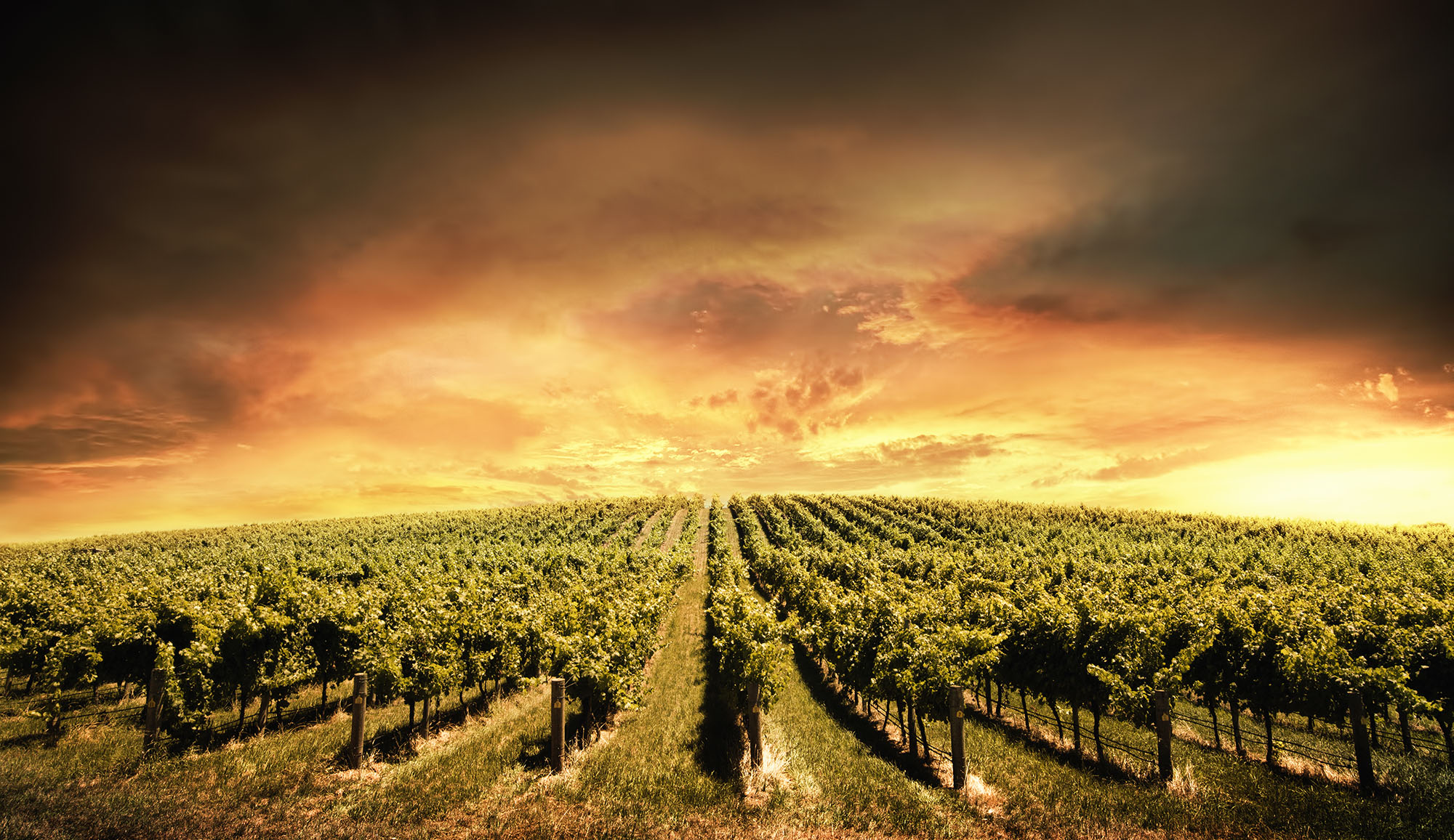

Old World wine refers primarily to wine made in Europe but can also include other regions of the Mediterranean basin with long histories of winemaking such as North Africa and the Near East. The phrase is often used in contrast to “New World wine” which refers primarily to wines from New World wine regions such as the United States, Australia, South America and South Africa.
The term “Old World wine” does not refer to a homogeneous style with “Old World wine regions” like Austria, France, Germany, Italy, Portugal, Romania and Spain each making vastly different styles of wine even within their own borders. Rather, the term is used to describe general differences in viticulture and winemaking philosophies between the Old World regions where tradition and the role of terroir lead versus the New World where science and the role of the winemaker are more often emphasized. In recent times, the globalization of wine and advent of flying winemakers have lessened the distinction between the two terms with winemakers in one region being able to produce wines that can display the traits of the other region—i.e. an “Old World style” wine being produced in a New World wine region like California or Chile and vice versa.
The two most guiding influences of Old World style winemaking are that of tradition and terroir. The former refers to the long history of a wine region, while the latter refers to geography and the unique characteristics of a place. The centuries-old histories of many Old World wine regions have given the regions time to develop and adapt techniques that presumably best suit a particular wine growing area.
[trx_video url=”https://www.youtube.com/watch?v=69iT7IOYQFc” autoplay=”off” title=”Video title” image=”http://wine.themerex.net/wp-content/uploads/2014/06/rv1BIw0tSKi0xLtGrpR0_TE3_0185.jpg”]
These can include which grape varieties to plant, trellising methods, maximum permitted yields, as well as winemaking techniques. Over time, these traditional practices became enshrined in local regulations such as the French Appellation d’origine contrôlée (AOC), Italian Denominazione di origine controllata (DOC), Spanish Denominación de Origen (DO) and Portuguese Denominação de Origem Controlada (DOC) laws.
Terroir is often used to describe the aspects of a wine region such as soil, climate and topography that are often out of the winemaker’s control. They are the unique attributes that, theoretically, make a Sangiovese based wine from Chianti taste different from a Sangiovese based wine made anywhere else in the world even if exactly the same winemaking techniques are used. While wine in the New World are often labeled based on the varietal (such as Chardonnay or Tempranillo), wines in the Old World are generally labeled based on the region or place that they come from (such as Montrachet or Ribera del Duero). This is because Old World winemakers believe that the unique terroir-driven characteristics of where a wine comes from plays a more distinct role in shaping the resulting wine than the grape variety itself.