Latest News
Kitchen Chat and more…

[trx_section align=”right” dedicated=”yes” columns=”1_2″ bottom=”0″]
[trx_skills type=”bar” dir=”vertical” layout=”columns” count=”4″ maximum=”1000″]
[trx_skills_item level=”753″ title=”Bouquet”]
[trx_skills_item level=”980″ title=”Chocolaty”]
[trx_skills_item level=”660″ title=”Acidity”]
[trx_skills_item level=”870″ title=”Alcohol”]
[/trx_skills]
[/trx_section]
Cabernet Franc is one of the major black grape varieties worldwide. It is principally grown for blending with Cabernet Sauvignon and Merlot in the Bordeaux style, but can also be vinified alone, as in the Loire’s Chinon. In addition to being used in blends and produced as a varietal in Canada and the United States, it is made into ice wine in those regions. Cabernet Franc is lighter than Cabernet Sauvignon, making a bright pale red wine that contributes finesse and lends a peppery perfume to blends with more robust grapes. Depending on the growing region and style of wine, additional aromas can include tobacco, raspberry, bell pepper, cassis, and violets. Records of Cabernet Franc in Bordeaux go back to the end of the 18th century, although it was planted in Loire long before that time. DNA analysis indicates that Cabernet Franc is one of two parents of Cabernet Sauvignon, a cross between it and Sauvignon blanc.
[trx_line style=”solid”]
[trx_skills maximum=”100″ type=”bar” dir=”horizontal” layout=”columns” count=”5″]
[trx_skills_item title=”Bouquet” level=”98%”]
[trx_skills_item title=”Sweetness” level=”66%”]
[trx_skills_item title=”Chocolaty” level=”87%”]
[trx_skills_item title=”Acidity” level=”82%”]
[trx_skills_item title=”Alcohol” level=”76%”]
[/trx_skills]
Cabernet Franc is believed to have been established in the Libournais region of southwest France sometime in the 17th century, when Cardinal Richelieu transported cuttings of the vine to the Loire Valley. They were planted at the Abbey of Bourgueil under the care of an abbot named Breton, whose name became associated with the grape. By the 18th century, plantings of Cabernet Franc (known as Bouchet) were found throughout Fronsac, Pomerol and St-Emilion, making quality wines. As Cabernet Sauvignon grew more popular in the 18th and 19th centuries, the close similarity of the two grapes was observed and theories emerged as to the extent of their relationship. In 1997, DNA evidence emerged to show that Cabernet Franc had crossed with Sauvignon blanc to produce Cabernet Sauvignon. In general, Cabernet Franc is very similar to Cabernet Sauvignon, but buds and ripens at least a week earlier. This trait allows the vine to thrive in slightly cooler climates than Cabernet Sauvignon, such as the Loire Valley.
[trx_section align=”right” columns=”2_3″ bottom=”0″]
[trx_title type=”4″ position=”left” icon=”icon-gauge” bottom=”0″]Property bar (layout “Rows”)[/trx_title]
[trx_skills maximum=”100″ type=”bar” dir=”horizontal” layout=”rows” count=”5″]
[trx_skills_item title=”Bouquet” level=”98%”]
[trx_skills_item title=”Sweetness” level=”66%”]
[trx_skills_item title=”Chocolaty” level=”87%”]
[trx_skills_item title=”Acidity” level=”82%”]
[trx_skills_item title=”Alcohol” level=”76%”]
[/trx_skills]
[/trx_section]
In Bordeaux, plantings of Cabernet Franc are treated as an “insurance policy” against inclement weather close to harvest that may damage plantings of Cabernet Sauvignon. Its early budding does pose the viticultural hazard of coulure early in the growing season. The vine is vigorous and upright, with dark-green, 5-lobed leaves. The winged bunches are elongate and small-medium in size. The berries are quite small and blue-black in color, with fairly thin skins. The Cabernet Franc grapevine is more prone to mutation than Cabernet Sauvignon, less so than Pinot noir. Cabernet Franc can adapt to a wide variety of vineyard soil types but seems to thrive in sandy, chalk soils, producing heavier, more full bodied wines there. In the Loire Valley, terroir based differences can be perceived between wines made from grapes grown in gravel terraces versus tuffeau slopes. The grape is highly yield sensitive, with over-cropping producing wines with more green, vegetal notes. Across the world Cabernet Franc is one of the twenty most widely planted grape varieties. Plantings are found throughout Europe, in the New World, China and Kazakhstan. In many regions, it is planted as a component of a Bordeaux-style blend such as Meritage, playing secondary role to Cabernet Sauvignon and Merlot. In parts of northeast Italy, Anjou-Saumur, Touraine and the right bank region of Bordeaux, Cabernet Franc both plays a more prominent role in blends and is vinted as a varietal.
[trx_section align=”right” dedicated=”yes” columns=”2_3″ scroll=”no” dir=”horizontal” bottom=”0″]
[trx_team indent=”yes” rounding=”no” style=”1″ columns=”2″]
[trx_team_item user=”TREX” name=”Pamela Fryman” position=”Manager” photo=”http://wine.themerex.net/wp-content/uploads/2014/01/3.jpg”][/trx_team_item]
[trx_team_item user=”TREX” name=”johnny Doe” position=”Owner” photo=”http://wine.themerex.net/wp-content/uploads/2014/01/1.jpg”][/trx_team_item]
[/trx_team]
[/trx_section]
We are a small family winery adhering to principles of quality wine making. We firmly believe that the wine we make is capable of competing with world famous brands. Our wine is a combination of hard work of our wine makers and the uniqueness of terroir; it’s thoroughness on each stage of wine making and usage of up-to-date techniques, as well as it’s an environmental management and respect to our customers. For the wine to become a premium quality we use only the best grapes harvested manually, we transport them in small portions to avoid damage when transit, as well as we use cooling, cold maceration and crushing before compression. Wine House does its best to ensure that each of their clients gets exceptional assistance. Our team is attentive to our customers, and we work hard to make sure you receive the premium quality product. Welcome to our website for exchanging information and points of view on our Wine House company. The quality of Wine House’s wines has always been based on a commitment to selecting the finest fruit. Whether carefully sourcing grapes from top sites in the region or committing itself to estate vineyards, the winery was built on the belief that great wines begin in the vineyard. We have been crafting wine with love to our customers for years, so that you are not disappointed with our products.
[trx_line style=”solid”]
[trx_team indent=”yes” rounding=”yes” style=”2″ columns=”4″]
[trx_team_item user=”TREX” name=”Pamela Fryman” position=”Manager” photo=”http://wine.themerex.net/wp-content/uploads/2014/01/3.jpg”]
We have been crafting wine with love to our customers for years, so that you are not disappointed with our products.
[/trx_team_item]
[trx_team_item user=”TREX” name=”Miki Williams” position=”Assistant” photo=”http://wine.themerex.net/wp-content/uploads/2014/06/3.jpg”]
We have been crafting wine with love to our customers for years, so that you are not disappointed with our products.
[/trx_team_item]
[trx_team_item user=”TREX” name=”Mike Newton” position=”Owner” photo=”http://wine.themerex.net/wp-content/uploads/2014/01/1.jpg”]
We have been crafting wine with love to our customers for years, so that you are not disappointed with our products.
[/trx_team_item]
[trx_team_item user=”TREX” name=”Johnny Doe” position=”Winemaker” photo=”http://wine.themerex.net/wp-content/uploads/2014/01/2.jpg”]
We have been crafting wine with love to our customers for years, so that you are not disappointed with our products.
[/trx_team_item]
[/trx_team]
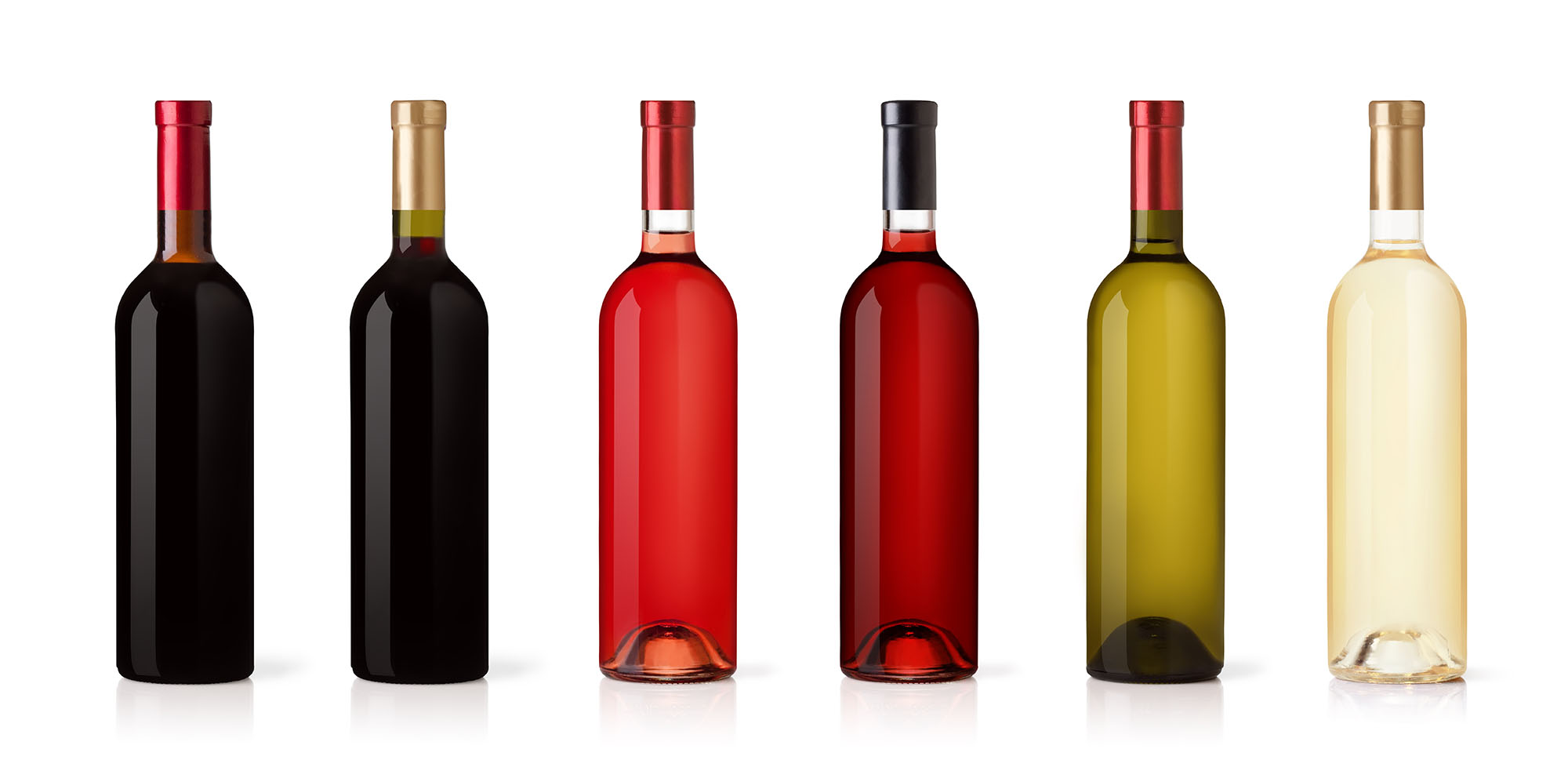
Regulations govern the classification and sale of wine in many regions of the world. European wines tend to be classified by region (e.g. Bordeaux, Rioja and Chianti), while non-European wines are most often classified by grape (e.g. Pinot noir and Merlot). Market recognition of particular regions has recently been leading to their increased prominence on non-European wine labels. Examples of recognized non-European locales include Napa Valley, Santa Clara Valley and Sonoma Valley in California; Willamette Valley in Oregon; Columbia Valley in Washington; Barossa Valley in South Australia and Hunter Valley in New South Wales; Luján de Cuyo in Argentina; Central Valley in Chile; Vale dos Vinhedos in Brazil; Hawke’s Bay and Marlborough in New Zealand; and Okanagan Valley and Niagara Peninsula in Canada.


Some blended wine names are marketing terms whose use is governed by trademark law rather than by specific wine laws. For example, Meritage (sounds like “heritage”) is generally a Bordeaux-style blend of Cabernet Sauvignon and Merlot, but may also include Cabernet Franc, Petit Verdot, and Malbec. Commercial use of the term Meritage is allowed only via licensing agreements with the Meritage Association.
France has various appellation systems based on the concept of terroir, with classifications ranging from Vin de Table (“table wine”) at the bottom, through Vin de Pays and Appellation d’Origine Vin Délimité de Qualité Supérieure (AOVDQS), up to Appellation d’Origine Contrôlée (AOC) or similar, depending on the region. Portugal has developed a system resembling that of France and, in fact, pioneered this concept in 1756 with a royal charter creating the Demarcated Douro Region and regulating the production and trade of wine. Germany created a similar scheme in 2002, although it has not yet achieved the authority of the other countries’ classification systems. Spain, Greece and Italy have classifications based on a dual system of region of origin and product quality.
[trx_slider engine=”swiper” theme=”dark” count=”3″ offset=”0″ orderby=”date” controls=”yes” pagination=”yes” titles=”no” links=”yes” height=”500″]
[trx_slider_item src=”http://wine.themerex.net/wp-content/uploads/2014/02/picjumbo.com_IMG_7779.jpg” theme=”dark”]
[trx_slider_item src=”http://wine.themerex.net/wp-content/uploads/2014/09/kaboompics.com_Lunch-table-salad.jpg” theme=”dark”]
[trx_slider_item src=”http://wine.themerex.net/wp-content/uploads/2014/10/kaboompics.com_Beautifully-served-table-for-dinner.jpg” theme=”dark”]
[/trx_slider]
In the United States, for a wine to be vintage-dated and labeled with a country of origin or American Viticultural Area (AVA) (e.g. Sonoma Valley), 95% of its volume must be from grapes harvested in that year. If a wine is not labeled with a country of origin or AVA the percentage requirement is lowered to 85%. Vintage wines are generally bottled in a single batch so that each bottle will have a similar taste. Climate’s impact on the character of a wine can be significant enough to cause different vintages from the same vineyard to vary dramatically in flavor and quality. Thus, vintage wines are produced to be individually characteristic of the particular vintage and to serve as the flagship wines of the producer. Superior vintages from reputable producers and regions will often command much higher prices than their average ones. Some vintage wines (e.g. Brunello), are only made in better-than-average years. For consistency, non-vintage wines can be blended from more than one vintage, which helps winemakers sustain a reliable market image and maintain sales even in bad years. One recent study suggests that for the average wine drinker, the vintage year may not be as significant for perceived quality as had been thought, although wine connoisseurs continue to place great importance on it.