Latest News
Kitchen Chat and more…

Old World winemaking is often terroir driven with emphasis being placed on how well the wine communicates the sense of place where it originated. For example, a winemaker making a Riesling from the Mosel will often try to highlight the unique traits of the Mosel wine region (such as its slate soils) with the wine expressing those traits in the form of minerality.
Read more

Vine cuttings from the Cape of Good Hope were brought to the penal colony of New South Wales by Governor Phillip on the First Fleet (1788). An attempt at wine making from these first vines failed, but with perseverance, other settlers managed to successfully cultivate vines for winemaking, and Australian made wine was available for sale domestically by the 1820s. In 1822 Gregory Blaxland became the first person to export Australian wine, and was the first winemaker to win an overseas award. In 1830 vineyards were established in the Hunter Valley. In 1833 James Busby returned from France and Spain with a serious selection of grape varieties including most classic French grapes and a good selection of grapes for fortified wine production. Early Australian winemakers faced many difficulties, particularly due to the unfamiliar Australian climate. However they eventually achieved considerable success. “At the 1873 Vienna Exhibition the French judges, tasting blind, praised some wines from Victoria, but withdrew in protest when the provenance of the wine was revealed, on the grounds that wines of that quality must clearly be French.” Australian wines continued to win high honours in French competitions.
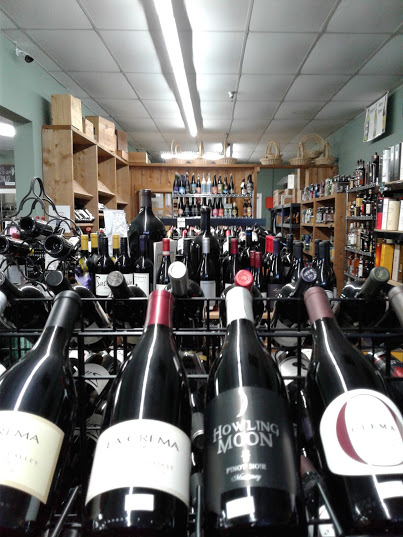

A Victorian Syrah (also called Shiraz) competing in the 1878 Paris Exhibition was likened to Château Margaux and “its taste completed its trinity of perfection.” One Australian wine won a gold medal “first class” at the 1882 Bordeaux International Exhibition and another won a gold medal “against the world” at the 1889 Paris International Exhibition.
Chilean wine begun to modernize in 1851 when Sylvestre Ochagavia imported cuttings of French varieties. Sylvestre Ochagavia is credited with introducing the varieaties Cabernet Sauvignon, Pinot noir, Cot, Merlot, Semillon and Riesling into Chile. Other wealthy wine growers followed suite. By the 1870s the wine industry was the most developed area of Chilean agriculture.
The region of Mendoza, or historically Cuyo, experienced an unprecedented wine-boom in the 19th century and early 20th century which turned it into the fifth wine growing area of the world and the first in Latin America. The establishment of the Buenos Aires-Mendoza railroad in 1885 ended the lengthy and costly trade with carts that connected these two regions of Argentina and sparked development of vineyards in Mendoza. Furthermore massive immigration to Río de La Plata mainly from Southern Europe increased demand and bought know-how to the old-fashioned Argentine wine industry. The vineyards of Mendoza totalled 1.000 ha in 1830 but grew to 45.000 in 1910, surpassing Chile which had during the 19th century had a larger areas planted with vines and a more modern industry. By 1910 around 80% of the area of Argentine vineyards were planted with French stock, mainly Malbec.



Archaeological evidence has established the earliest-known production of wine from fermenting grapes during the late Neolithic or early Chalcolithic in the Caucasus and the northern edge of the Middle East. An extensive gene-mapping project in 2006 analyzed the heritage of more than 110 modern grape cultivars, narrowing their origin to a region of Georgia. This matches the earliest discovered sites containing shards of wine-stained pottery, dated to c. 6000 BC in Georgia, and c. 5000 BC in Iran. The jars at the northwestern Iranian site already showed treatment with preservative turpentine pine resin, the flavoring of modern retsina. By c. 4500 BC, wine production had spread to Grecian Macedonia, the site of the first recovered crushed grapes, and an entire winery was discovered in 2011 inside the Areni-1 cave in Armenia, dated to c. 4100 BC. A 2003 report by archaeologists indicates a possibility that grapes were mixed with rice to produce mixed fermented beverages in China in the early years of the seventh millennium BC. Pottery jars from the Neolithic site of Jiahu, Henan, contained traces of tartaric acid and other organic compounds commonly found in wine. However, other fruits indigenous to the region, such as hawthorn, cannot be ruled out. If these beverages, which seem to be the precursors of rice wine, included grapes rather than other fruits, they would have been any of the several dozen indigenous wild species in China, rather than Vitis vinifera, which was introduced there some 6,000 years later.
The spread of wine culture westwards was most probably due to the Phoenicians who spread outward from a base of city-states along the Lebanese and Palestinian coast. The wines of Byblos were exported to Egypt during the Old Kingdom and then throughout the Mediterranean. Evidence includes two Phoenician shipwrecks from 750 BC discovered by Robert Ballard, whose cargo of wine was still intact. As the first great traders in wine (cherem), the Phoenicians seem to have protected it from oxidation with a layer of olive oil, followed by a seal of pinewood and resin, again similar to retsina.
Literary references to wine are abundant in Homer (8th century BC, but possibly relating earlier compositions), Alkman (7th century BC), and others. In ancient Egypt, six of 36 wine amphoras were found in the tomb of King Tutankhamun bearing the name “Kha’y”, a royal chief vintner. Five of these amphoras were designated as originating from the king’s personal estate, with the sixth from the estate of the royal house of Aten. Traces of wine have also been found in central Asian Xinjiang in modern-day China, dating from the second and first millennia BC.