Latest News
Kitchen Chat and more…




Pinot noir is almost certainly a very ancient variety that may be only one or two generations removed from wild, Vitis sylvestris, vines. Its origins are nevertheless unclear: In De re rustica, Columella describes a grape variety similar to pinot noir in Burgundy during the 1st century CE, however, vines have grown wild as far north as Belgium in the days before phylloxera, and it is possible that Pinot represents a direct domestication of (hermaphrodite-flowered) Vitis sylvestris.
Ferdinand Regner has argued that pinot noir is a cross between Pinot Meunier (Schwarzriesling) and Traminer, but this claim has since been refuted. In fact Pinot Meunier has been shown to be a chimerical mutation (in the epidermal cells) which makes the shoot tips and leaves prominently hairy-white and the vine a little smaller and early ripening. Thus Pinot Meunier is a chimera with two tissue layers of different genetic makeup, both of which contain a mutation making them non-identical to, and mutations of, Pinot noir (as well as of any of the other color forms of Pinot). As such, Pinot Meunier cannot be a parent of Pinot noir, and, indeed, it seems likely that chimerical mutations which can generate Pinot gris from other Pinots (principally blanc or noir) may in turn be the genetic pathway for the emergence of Pinot Meunier.
Pinot noir can be particularly prone to mutation (suggesting it has active transposable elements), and thanks to its long history in cultivation there are hundreds of different clones in vineyards and vine collections worldwide. More than 50 are officially recognized in France compared to only 25 of the much more widely planted Cabernet Sauvignon. The French Etablissement National Technique pour l’Amelioration de la Viticulture (ENTAV) has set up a program to select the best clones of Pinot. This program has succeeded in increasing the number of quality clones available to growers. In the new world, particularly in Oregon, wines of extraordinary quality continue to be made from the (ex-University of California at Davis) Pommard (principally UCD4) and Wadensvil (UCD 1A and / or 2A) clones.
Gamay Beaujolais is a Californian misnomer for a UCD clone series of upright-growing (‘Pinot droit’) Pinot noir. Planted mostly in California it also became established in New Zealand. In this latter country, its disposition to poor fruit set in cool flowering conditions can be problematic. Claims that the ‘Gamay Beaujolais’ Pinot noir was brought to California by Paul Masson are not correct. It was collected in France by Harold Olmo for UCD in the 1950s and was one of the first Pinot noir vines this institution offered as a high health clonal line from about 1962 onward. However, it was misleadingly identified at UCD as a ‘Gamay Beaujolais’ type (of Pinot noir). In general, these upright growing ‘Pinot droit’ clones are highly productive (in suitable, hot-to-warm, flowering conditions) and in California and New Zealand they give robust, burly, wines favored by those who like muscle rather than charm and velvety finesse in their Pinot noir wines. In Burgundy, the use of (highly productive) Pinot droit clones is reportedly still widespread in inferior, Village appellation, or even non-appellation, vineyards and Pinot droit is consequently regarded, arguably with very good reason, as a (genetic) sub-form significantly inferior to classical, decumbent, ‘Pinot fine’ or ‘Pinot tordu’, clonal lines of Pinot.


Fortified wine is a wine to which a distilled spirit, usually brandy, is added. Many different styles of fortified wine have been developed, including Port, Sherry, Madeira, Marsala, Commandaria wine and the aromatized wine Vermouth. The original reason for fortifying wine was to preserve it, since ethanol is a natural antiseptic. Even though other preservation methods now exist, fortification continues to be used because the process can add distinct flavors to the finished product.
Although grape brandy is most commonly added to produce fortified wines, the additional alcohol may also be neutral spirit that has been distilled from grapes, grain, sugar beets, or sugarcane. Regional appellation laws may dictate the types of spirit that are permitted for fortification. The source of the additional alcohol and the method of its distillation can affect the flavor of the fortified wine. If neutral spirit is used, it will usually have been produced with a continuous still, rather than a pot still.
When added to wine before the fermentation process is complete, the alcohol in the distilled beverage kills the yeast and leaves residual sugar behind. The end result is a wine that is both sweeter and stronger, normally containing about 20% alcohol by volume (ABV). During the fermentation process, yeast cells in the must continue to convert sugar into alcohol until the must reaches an alcohol level of 16%–18%. At this level, the alcohol becomes toxic to the yeast and kills it. If fermentation is allowed to run to completion, the resulting wine will (in most cases) be low in sugar and will be considered a dry wine. The earlier in the fermentation process that alcohol is added, the sweeter the resulting wine will be. For drier fortified wine styles, such as sherry, the alcohol is added shortly before or after the end of the fermentation.
In the case of some fortified wine styles (such as late harvest and botrytized wines), a naturally high level of sugar will inhibit the yeast. This causes fermentation to stop before the wine can become dry.


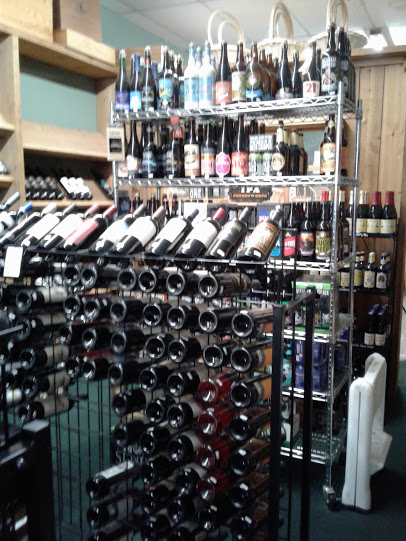

As red wine ages, the harsh tannins of its youth gradually give way to a softer mouthfeel. An inky dark color will eventually fade to a light brick red. These changes occur due to the complex chemical reactions of the phenolic compounds of the wine. In processes that begin during fermentation and continue after bottling, these compounds bind together and aggregate. Eventually these particles reach a certain size where they are too large to stay suspended in the solution and precipitate out. The presence of visible sediment in a bottle will usually indicate a mature wine. The resulting wine, with this loss of tannins and pigment, will have a paler color and taste softer, less astringent. The sediment, while harmless, can have an unpleasant taste and is often separated from the wine by decanting. During the aging process, the perception of a wine’s acidity may change even though the total measurable amount of acidity is more or less constant throughout a wine’s life. This is due to the esterification of the acids, combining with alcohols in complex array to form esters. In addition to making a wine taste less acidic, these esters introduce a range of possible aromas. Eventually the wine may age to a point where other components of the wine (such as a tannins and fruit) are less noticeable themselves, which will then bring back a heightened perception of wine acidity.
Other chemical processes that occur during aging include the hydrolysis of flavor precursors which detach themselves from glucose molecules and introduce new flavor notes in the older wine and aldehydes become oxidized. The interaction of certain phenolics develop what is known as tertiary aromas which are different from the primary aromas that are derived from the grape and during fermentation.
As a wine starts to mature, its bouquet will become more developed and multi-layered. While a taster may be able to pick out a few fruit notes in a young wine, a more complex wine will have several distinct fruit, floral, earthy, mineral and oak derived notes. The lingering finish of a wine will lengthen. Eventually the wine will reach a point of maturity, when it is said to be at its “peak”. This is the point when the wine has the maximum amount of complexity, most pleasing mouthfeel and softening of tannins and has not yet started to decay. When this point will occur is not yet predictable and can vary from bottle to bottle. If a wine is aged for too long, it will start to descend into decrepitude where the fruit tastes hollow and weak while the wine’s acidity becomes dominant.