The Practice of Wine Tasting

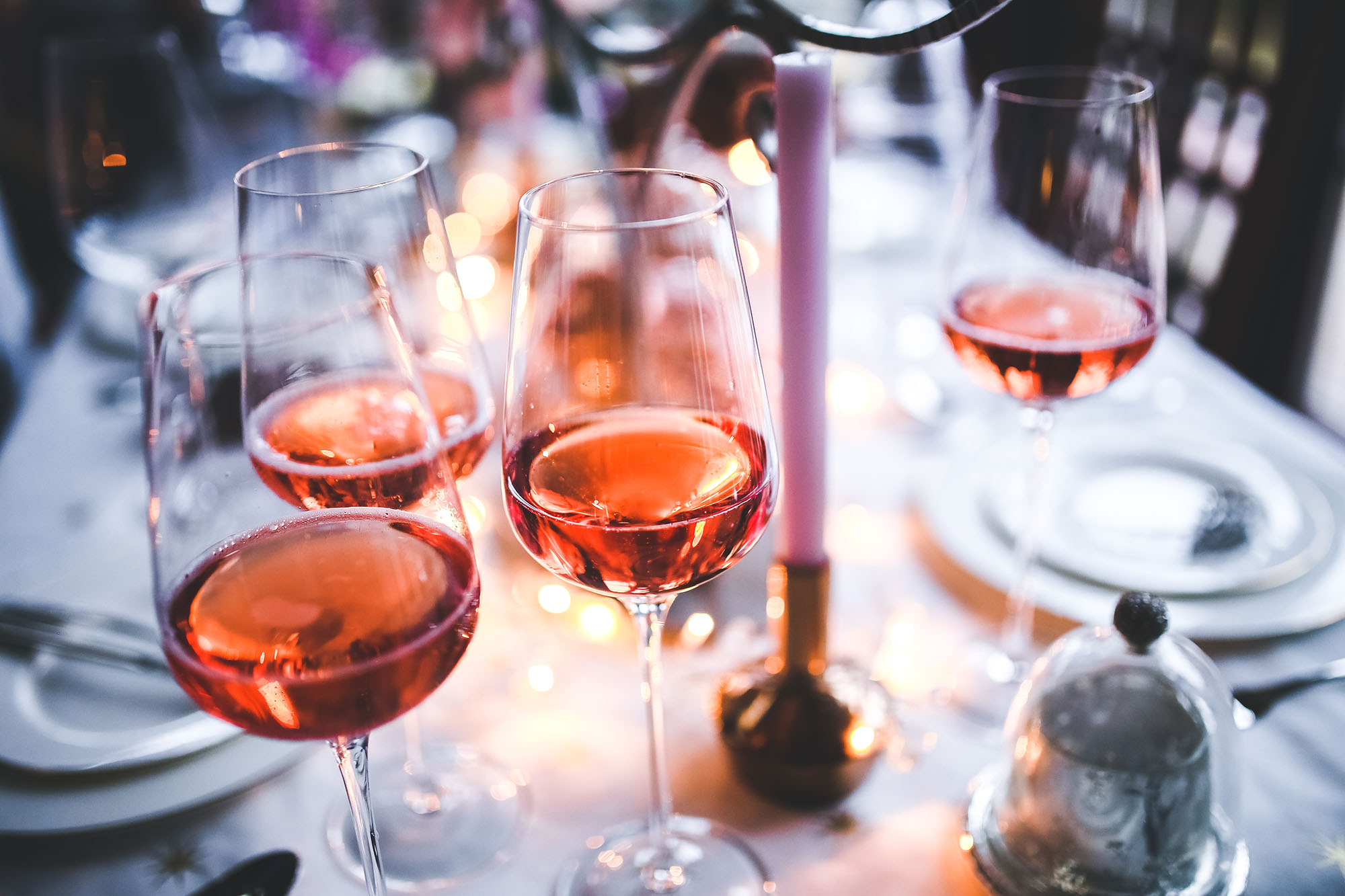
Wine tasting (often, in wine circles, simply tasting) is the sensory examination and evaluation of wine. While the practice of wine tasting is as ancient as its production, a more formalized methodology has slowly become established from the 14th century onwards. Modern, professional wine tasters (such as sommeliers or buyers for retailers) use a constantly evolving formal terminology which is used to describe the range of perceived flavors, aromas and general characteristics of a wine. More informal, recreational tasting may use similar terminology, usually involving a much less analytical process for a more general, personal appreciation.

The results of the four recognized stages to wine tasting: appearance, “in glass” the aroma of the wine, “in mouth” sensations, “finish” (aftertaste) – are combined in order to establish the following properties of a wine: complexity and character, potential (suitability for aging or drinking), possible faults.

A wine’s overall quality assessment, based on this examination, follows further careful description and comparison with recognized standards, both with respect to other wines in its price range and according to known factors pertaining to the region or vintage; if it is typical of the region or diverges in style; if it uses certain wine-making techniques, such as barrel fermentation or malolactic fermentation, or any other remarkable or unusual characteristics.

Whereas wines are regularly tasted in isolation, a wine’s quality assessment is more objective when performed alongside several other wines, in what are known as tasting “flights”. Wines may be deliberately selected for their vintage (“horizontal” tasting) or proceed from a single winery (“vertical” tasting), to better compare vineyard and vintages, respectively. Alternatively, in order to promote an unbiased analysis, bottles and even glasses may be disguised in a “blind” tasting, to rule out any prejudicial awareness of either vintage or winery.

Health Effects of Wine

Although excessive alcohol consumption has adverse health effects, epidemiological studies have consistently demonstrated that moderate consumption of alcohol and wine is statistically associated with a decrease in cardiovascular illness such as heart failure. Additional news reports on the French paradox also back the relationship. This paradox concerns the comparatively low incidence of coronary heart disease in France despite relatively high levels of saturated fat in the traditional French diet. Some epidemiologists suspect that this is due to higher wine consumption by the French, but the scientific evidence for this theory is limited. Because the average moderate wine drinker is likely to exercise more often, to be more health conscious, and to be from a higher educational and socioeconomic background, the association between moderate wine drinking and better health may be related to confounding factors or represent a correlation rather than cause and effect.

Population studies have observed a J-curve correlation between wine consumption and the prevalence of heart disease: heavy drinkers have an elevated prevalence, while moderate drinkers (up to 20g of alcohol per day, approximately 200 ml (7 imp fl oz; 7 US fl oz) of 12.7% ABV wine) have a lower prevalence than non-drinkers. Studies have also found that moderate consumption of other alcoholic beverages is correlated with decreased mortality from cardiovascular causes, although the association is stronger for wine. Additionally, some studies have found a greater correlation of health benefits with red than white wine, though other studies have found no difference. Red wine contains more polyphenols than white wine, and these could be protective against cardiovascular disease.

A chemical in grapes, red wine, peanuts and blueberries called resveratrol has been shown to have both cardioprotective and chemoprotective effects in animal studies. Low doses of resveratrol in the diet of middle-aged mice has a widespread influence on the genetic factors related to aging and may confer special protection on the heart. Specifically, low doses of resveratrol mimic the effects of caloric restriction—diets with 20–30% fewer calories than a typical diet. Resveratrol is produced naturally by grape skins in response to fungal infection, including exposure to yeast during fermentation. As white wine has minimal contact with grape skins during this process, it generally contains lower levels of the chemical. Beneficial compounds in wine also include other polyphenols, antioxidants, and flavonoids.

Red wines from the south of France and from Sardinia in Italy have the highest levels of procyanidins, compounds in grape seeds which could be responsible for red wine’s heart benefits. Red wines from these areas contain between two and four times as much procyanidins as other red wines tested. Procyanidins suppress the synthesis of a peptide called endothelin-1 that constricts blood vessels.

Mutants and Clones of Pinot Noir

Pinot noir is almost certainly a very ancient variety that may be only one or two generations removed from wild, Vitis sylvestris, vines. Its origins are nevertheless unclear: In De re rustica, Columella describes a grape variety similar to pinot noir in Burgundy during the 1st century CE, however, vines have grown wild as far north as Belgium in the days before phylloxera, and it is possible that Pinot represents a direct domestication of (hermaphrodite-flowered) Vitis sylvestris.

Ferdinand Regner has argued that pinot noir is a cross between Pinot Meunier (Schwarzriesling) and Traminer, but this claim has since been refuted. In fact Pinot Meunier has been shown to be a chimerical mutation (in the epidermal cells) which makes the shoot tips and leaves prominently hairy-white and the vine a little smaller and early ripening. Thus Pinot Meunier is a chimera with two tissue layers of different genetic makeup, both of which contain a mutation making them non-identical to, and mutations of, Pinot noir (as well as of any of the other color forms of Pinot). As such, Pinot Meunier cannot be a parent of Pinot noir, and, indeed, it seems likely that chimerical mutations which can generate Pinot gris from other Pinots (principally blanc or noir) may in turn be the genetic pathway for the emergence of Pinot Meunier.

Pinot noir can be particularly prone to mutation (suggesting it has active transposable elements), and thanks to its long history in cultivation there are hundreds of different clones in vineyards and vine collections worldwide. More than 50 are officially recognized in France compared to only 25 of the much more widely planted Cabernet Sauvignon. The French Etablissement National Technique pour l’Amelioration de la Viticulture (ENTAV) has set up a program to select the best clones of Pinot. This program has succeeded in increasing the number of quality clones available to growers. In the new world, particularly in Oregon, wines of extraordinary quality continue to be made from the (ex-University of California at Davis) Pommard (principally UCD4) and Wadensvil (UCD 1A and / or 2A) clones.

Gamay Beaujolais is a Californian misnomer for a UCD clone series of upright-growing (‘Pinot droit’) Pinot noir. Planted mostly in California it also became established in New Zealand. In this latter country, its disposition to poor fruit set in cool flowering conditions can be problematic. Claims that the ‘Gamay Beaujolais’ Pinot noir was brought to California by Paul Masson are not correct. It was collected in France by Harold Olmo for UCD in the 1950s and was one of the first Pinot noir vines this institution offered as a high health clonal line from about 1962 onward. However, it was misleadingly identified at UCD as a ‘Gamay Beaujolais’ type (of Pinot noir). In general, these upright growing ‘Pinot droit’ clones are highly productive (in suitable, hot-to-warm, flowering conditions) and in California and New Zealand they give robust, burly, wines favored by those who like muscle rather than charm and velvety finesse in their Pinot noir wines. In Burgundy, the use of (highly productive) Pinot droit clones is reportedly still widespread in inferior, Village appellation, or even non-appellation, vineyards and Pinot droit is consequently regarded, arguably with very good reason, as a (genetic) sub-form significantly inferior to classical, decumbent, ‘Pinot fine’ or ‘Pinot tordu’, clonal lines of Pinot.

What Is Fortified Wine Actually?

Fortified wine is a wine to which a distilled spirit, usually brandy, is added. Many different styles of fortified wine have been developed, including Port, Sherry, Madeira, Marsala, Commandaria wine and the aromatized wine Vermouth. The original reason for fortifying wine was to preserve it, since ethanol is a natural antiseptic. Even though other preservation methods now exist, fortification continues to be used because the process can add distinct flavors to the finished product.

Although grape brandy is most commonly added to produce fortified wines, the additional alcohol may also be neutral spirit that has been distilled from grapes, grain, sugar beets, or sugarcane. Regional appellation laws may dictate the types of spirit that are permitted for fortification. The source of the additional alcohol and the method of its distillation can affect the flavor of the fortified wine. If neutral spirit is used, it will usually have been produced with a continuous still, rather than a pot still.

When added to wine before the fermentation process is complete, the alcohol in the distilled beverage kills the yeast and leaves residual sugar behind. The end result is a wine that is both sweeter and stronger, normally containing about 20% alcohol by volume (ABV). During the fermentation process, yeast cells in the must continue to convert sugar into alcohol until the must reaches an alcohol level of 16%–18%. At this level, the alcohol becomes toxic to the yeast and kills it. If fermentation is allowed to run to completion, the resulting wine will (in most cases) be low in sugar and will be considered a dry wine. The earlier in the fermentation process that alcohol is added, the sweeter the resulting wine will be. For drier fortified wine styles, such as sherry, the alcohol is added shortly before or after the end of the fermentation.

In the case of some fortified wine styles (such as late harvest and botrytized wines), a naturally high level of sugar will inhibit the yeast. This causes fermentation to stop before the wine can become dry.

Exploring Effects On Wine

As red wine ages, the harsh tannins of its youth gradually give way to a softer mouthfeel. An inky dark color will eventually fade to a light brick red. These changes occur due to the complex chemical reactions of the phenolic compounds of the wine. In processes that begin during fermentation and continue after bottling, these compounds bind together and aggregate. Eventually these particles reach a certain size where they are too large to stay suspended in the solution and precipitate out. The presence of visible sediment in a bottle will usually indicate a mature wine. The resulting wine, with this loss of tannins and pigment, will have a paler color and taste softer, less astringent. The sediment, while harmless, can have an unpleasant taste and is often separated from the wine by decanting. During the aging process, the perception of a wine’s acidity may change even though the total measurable amount of acidity is more or less constant throughout a wine’s life. This is due to the esterification of the acids, combining with alcohols in complex array to form esters. In addition to making a wine taste less acidic, these esters introduce a range of possible aromas. Eventually the wine may age to a point where other components of the wine (such as a tannins and fruit) are less noticeable themselves, which will then bring back a heightened perception of wine acidity.

Other chemical processes that occur during aging include the hydrolysis of flavor precursors which detach themselves from glucose molecules and introduce new flavor notes in the older wine and aldehydes become oxidized. The interaction of certain phenolics develop what is known as tertiary aromas which are different from the primary aromas that are derived from the grape and during fermentation.

As a wine starts to mature, its bouquet will become more developed and multi-layered. While a taster may be able to pick out a few fruit notes in a young wine, a more complex wine will have several distinct fruit, floral, earthy, mineral and oak derived notes. The lingering finish of a wine will lengthen. Eventually the wine will reach a point of maturity, when it is said to be at its “peak”. This is the point when the wine has the maximum amount of complexity, most pleasing mouthfeel and softening of tannins and has not yet started to decay. When this point will occur is not yet predictable and can vary from bottle to bottle. If a wine is aged for too long, it will start to descend into decrepitude where the fruit tastes hollow and weak while the wine’s acidity becomes dominant.

Aging of Wine Does Matter

The aging of wine is potentially able to improve the quality of wine. This distinguishes wine from most other consumable goods. While wine is perishable and capable of deteriorating, complex chemical reactions involving a wine’s sugars, acids and phenolic compounds (such as tannins) can alter the aroma, color, mouthfeel and taste of the wine in a way that may be more pleasing to the taster. The ability of a wine to age is influenced by many factors including grape variety, vintage, viticultural practices, wine region and winemaking style. The condition that the wine is kept in after bottling can also influence how well a wine ages and may require significant time and financial investment. The quality of an aged wine depends significantly bottle-by-bottle, depending on the conditions under which it was stored, and the condition of the bottle and cork, and thus it is said that rather than good old vintages, there are good old bottles. There is a significant mystique around the aging of wine, as its chemistry was not understood for a long time, and old wines are often sold for extraordinary prices. However, the vast majority of wine is not aged, and even wine that is aged is rarely aged for long; it is estimated that 90% of wine is meant to be consumed within a year of production, and 99% of wine within 5 years.

There is a widespread misconception that wine always improves with age, or that wine improves with extended aging, or that aging potential is an indicator of good wine. Some authorities state that more wine is consumed too old than too young. Aging changes wine, but does not categorically improve it or worsen it. Fruitness deteriorates rapidly, decreasing markedly after only 6 months in the bottle. Due to the cost of storage, it is not economical to age cheap wines, but many varieties of wine do not benefit from aging, regardless of the quality. Experts vary on precise numbers, but typically state that only 5–10% of wine improve after 1 year, and only 1% of wine improves after 5–10 years.

In general, wines with a low pH (such as Pinot Noir and Sangiovese) have a greater capability of aging. With red wines, a high level of flavor compounds, such as phenolics (most notably tannins), will increase the likelihood that a wine will be able to age. Wines with high levels of phenols include Cabernet Sauvignon, Nebbiolo and Syrah. The white wines with the longest aging potential tend to be those with a high amount of extract and acidity. The acidity in white wines, acting as a preservative, has a role similar to that of tannins in red wines. The process of making white wines, which includes little to no skin contact, means that white wines have a significantly lower amount of phenolic compounds, though barrel fermentation and oak aging can impart some phenols. Similarly, the minimal skin contact with rosé wine limits their aging potential.

Vintages in Winemaking

Vintage, in winemaking, is the process of picking grapes and creating the finished product (see Harvest (wine)). A vintage wine is one made from grapes that were all, or primarily, grown and harvested in a single specified year. In certain wines, it can denote quality, as in Port wine, where Port houses make and declare vintage Port in their best years. From this tradition, a common, though incorrect, usage applies the term to any wine that is perceived to be particularly old or of a particularly high quality.

Most countries allow a vintage wine to include a portion of wine that is not from the year denoted on the label. In Chile and South Africa, the requirement is 75% same-year content for vintage-dated wine. In Australia, New Zealand, and the member states of the European Union, the requirement is 85%. In the United States, the requirement is 85%, unless the wine is designated with an AVA, (e.g., Napa Valley), in which case it is 95%. Technically, the 85% rule in the United States applies equally to imports, but there are obvious difficulties in enforcing the regulation.

The importance of vintage, however, is both varied and disputed. In wine produced on the colder limits of wine production, vintage is often very important, because some seasons will be much warmer and produce riper grapes and better wine. On the other hand, a poor growing season can lead to grapes low in sugar, which lowers the quality of the resulting wine. In many wine regions, especially in the New World, growing seasons are much more uniform. In dry regions, the systematic and controlled use of irrigation also contributes to uniform vintages. However, such wines are regularly labeled by vintage because of consumer demand.

Wines of superior vintages from prestigious producers and regions will often command much higher prices than those from average vintages. This is especially the case if wines are likely to improve further with some age in the bottle. Some wines are only labeled with a vintage in better-than-average years, to maintain their quality and reputation, while the vast majority of wines are produced to be drunk young and fresh. In such cases, a vintage is usually considered less important. However, it can serve to protect consumers against buying a wine that would not be expected to improve with age and could be past its best, such as with Beaujolais nouveau, a wine style made to be consumed within months of its bottling.

The importance of vintage may sometimes be exaggerated. For example, New York Times wine columnist Frank J. Prial declared the vintage chart to be dead, writing that “winemakers of the world have rendered the vintage chart obsolete” (Prial), and Bill Marsano wrote that “winemakers now have the technology and skills to make good and even very good wines in undistinguished years” (Marsano). James Laube of Wine Spectator has asserted that “even an average vintage can yield some grand wines” (Laube).

Roman Weil, co-chairman of the Oenonomy Society of the US and Professor at the University of Chicago, tested the controversial hypothesis that experienced wine drinkers “cannot distinguish in blind tastings the wine of years rated high from those of years rated low, or, if they can, they do not agree with the vintage chart’s preferences” (Weil).

Dr. Weil used wines ranging from four to 17 years beyond their vintage with 240 wine drinkers and found that the tasters could not distinguish between wines of good and bad vintages except for Bordeaux wines. Even when they could make a distinction, the match between the tasters’ individual assessments and the charts’ rankings were little better than tossing a coin. When the tests were replicated with wine experts, including French wine academics, the results were again the same as chance.

Alternative Wine Closure

Alternative wine closures are substitute closures used in the wine industry for sealing wine bottles in place of traditional cork closures. The emergence of these alternatives has grown in response to quality control efforts by winemakers to protect against “cork taint” caused by the presence of the chemical trichloroanisole (TCA). The closures debate, chiefly between supporters of screw caps and natural corks, has increased the awareness of post-bottling wine chemistry, and the concept of winemaking has grown to continue after the bottling process, because closures with different oxygen transmission rates may lead to wines that taste different when they reach consumers.

Synthetic corks are made from plastic compounds designed to look and “pop” like natural cork, but without the risk of TCA contamination. Disadvantages of some wine synthetic corks include a risk of harmful air entering a bottle after only 18 months, as well as the difficulty in extracting them from the bottle and using the plastic cork to reseal the wine. James Laube of Wine Spectator notes that some can also impart a slight chemical flavour to the wine.

Vino-Seal is a plastic/glass closure released by Alcoa. Since its introduction into the European market in 2003, over 300 wineries have utilized Vino-Seal. Using a glass stopper with an inert o-ring, the Vino-Seal creates a hermetic seal that prevents oxidation and TCA contamination. A disadvantage with the Vino-Seal is the relatively high cost of each plug (70 cents each) and cost of manual bottling due to the lack of compatible bottling equipment outside of Europe. Vinolok is a glass stopper developed and produced by a Czech crystal glass producer Preciosa.

Zork is an alternative wine closure for still wines, that seals like a screw cap and pops like a cork, created by an Australian company of the same name. The closure has three parts: an outer cap providing a tamper-evident clamp that locks onto the band of a standard cork mouth bottle; an inner metal foil which provides an oxygen barrier similar to a screw cap, and an inner plunger which creates the ‘pop’ on extraction and reseals after use. Introduced in 2010, it is the first on-bottle, resealable closure for sparkling wines